
Guide Lanzarote
Surfing in the Canary Islands: waves & spots
Which Canary Island to surf, when the swell is real, and which breaks match your level: Famara, El Cotillo, El Confital and Las Américas.
Contents
If you are coming to the Canary Islands to surf, choose your level and the coast first, not the spot that shows up most on Instagram. From October to March, North Atlantic groundswell arrives. From May to September the ocean drops and the trade wind takes over.
The water usually sits between 18 and 23 °C. In winter the suit almost everyone wears is a 3/2. In Hossegor or Peniche, on those dates, you would be in a 5/4. Check the real sea temperature on AEMET before you pack.
The short decision:
- First lesson: El Cotillo, Corralejo or the south of Tenerife, on a small day.
- You can already stand up and you want a beach: northern Fuerteventura or Famara, first thing in the morning.
- You surf reef and you are coming in winter: El Quemao, with Famara as the backup, or El Confital.
- Only one of you surfs: southern Tenerife.
La Gomera lies southwest of Tenerife and receives a more filtered version of a north swell. La Palma and El Hierro have waves on their open coasts and few schools. If you want waves in the morning and the rest of the day already sorted, sleep on Fuerteventura, Lanzarote or southern Tenerife.
Canary Islands surfing, in brief
How to read the day
The trade wind blows from the northeast and usually fills in by late morning, strongest from spring through late summer.
- A north-facing coast: Famara, El Confital, El Socorro and the open stretch of El Cotillo. They want a south wind. A trade wind chops them up.
- A south-facing coast: Playa de las Américas. That same trade wind leaves it cleaner, and also smaller, because only the swell that has wrapped the island arrives.
A forecast of a messy two metres on the north coast of Tenerife can be a clean metre in front of the south-coast hotels. Height alone picks the wrong shore.
Period changes the ocean as much as height does. A metre and a half at 8 seconds has little push. The same metre and a half at 14 seconds has a different face, a different current, and it reaches coasts the short ocean never gets to.
When to go
The window with real power runs from October to March. The core is November to February, on northwest and north groundswell. December and January bring the biggest days and the messiest wind.
From May to September what is left is short-period windswell. It is useful for a lesson or a longboard. Booking El Quemao or El Confital for August is a flight spent looking at a small ocean.
If you can choose the dates, October, November, March and April are usually the better deal: swell is already arriving, and the easy beaches are not as packed as they are between Christmas and Epiphany. Those two weeks fill Famara, Las Canteras and Las Américas. On the north shore, go early: by mid-morning the trade wind has already decided the session.
Lanzarote: Famara and El Quemao
Famara
Famara is a long sand beach under the Risco cliff, with several peaks. It is also one of Europe's kitesurf beaches. If the sky is full of kites, the afternoon surf is chopped.
At half a metre with light wind it is a reasonable place to start. With size and a trade wind it stops being a lesson beach and becomes a beach break with rips. San Juan, the reef next door, is a step up from the sand.
The village, Caleta de Famara, sits at the south end. You walk north from there to spread the peaks out. The first one, by the car park, is usually the busiest. On a winter weekend the parking goes early.
El Quemao
El Quemao is at La Santa, not in the village of Famara. It is a hollow left over a lava shelf, and it also opens a fast right. The name is Canarian Spanish for "burnt": the rock it breaks on. The "European Pipeline" nickname describes the shape of the tube, not Hawaiian swell volume.
Less water makes it more critical. People who surf it are reading size, period and how much water is on the shelf that hour. On a first visit, that calculation is not something you improvise. The bottom holds long-spined sea urchins (Diadema antillarum): you want reef booties with a sole, not a swimming sock. If you are unsure, the plan is Famara.
Fuerteventura: El Cotillo
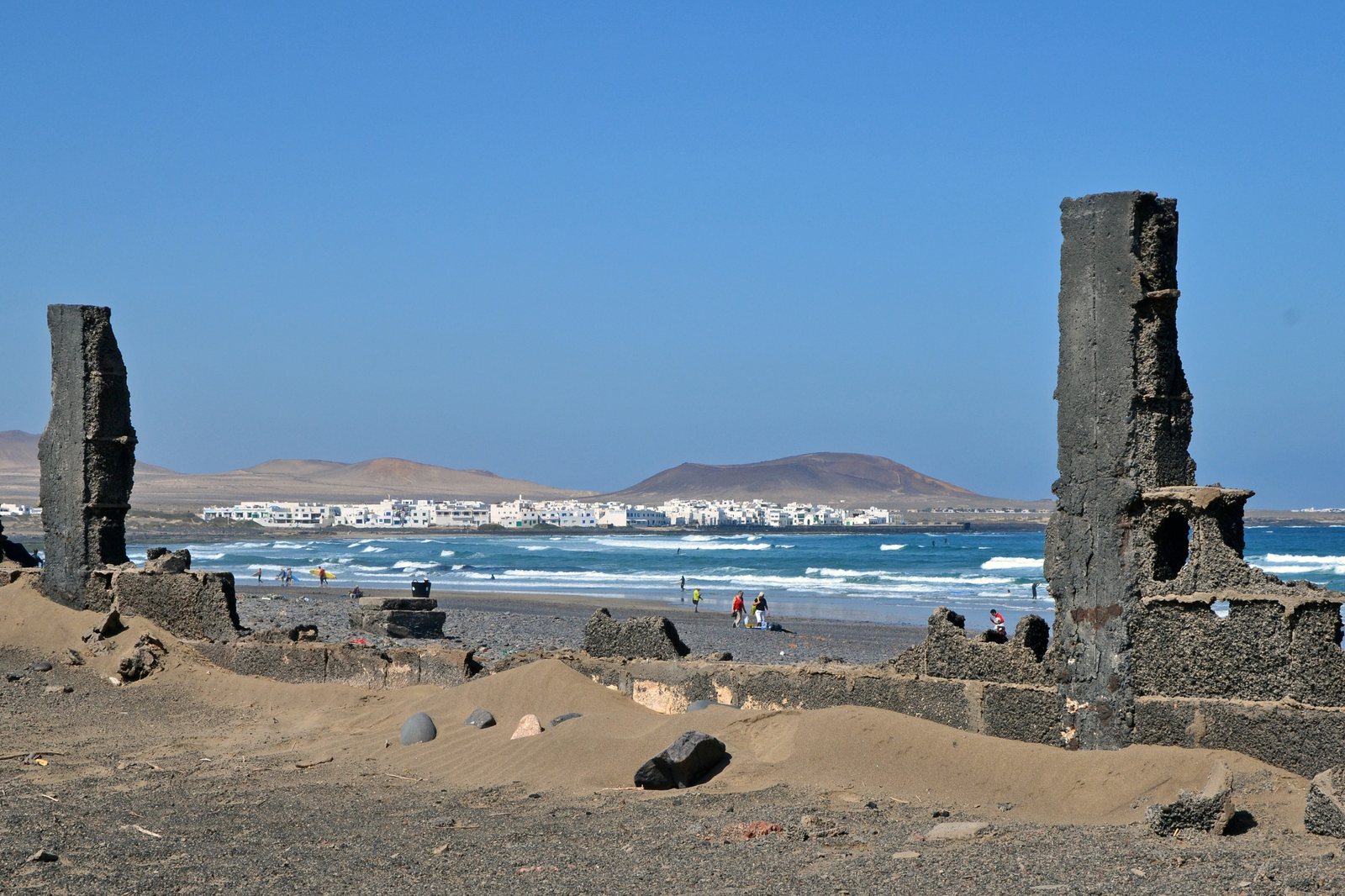
The north and northwest face the Atlantic with no island in front. El Cotillo is where you stay if you have come to surf: a fishing harbour, lagoons, and reef a few minutes away.
- Los Lagos and Playa del Castillo: more sheltered water. This is where lessons go when the sea is small.
- Piedra Playa: south of the village, more exposed. A step for someone who can already stand up, not day one.
- Majanicho and Los Lobos: lava reef. Booties. The lagoon in the photos and these peaks are two different oceans.
A car helps. Some access tracks are dirt: a low hire car does not have to follow the vans. In summer El Cotillo gets smaller and windier. The session of the year, on this coast, is a winter one.
Corralejo and the south
Corralejo, next to the dunes, is the convenient base: more services, more wind, and lessons for beginners. When the trades are strong, the surf session ends before the beach day does.
The south of the island, Sotavento and Costa Calma, is a different trip.
If you want El Cotillo's waves, do not book the south.
Beginner lessons on Fuerteventura
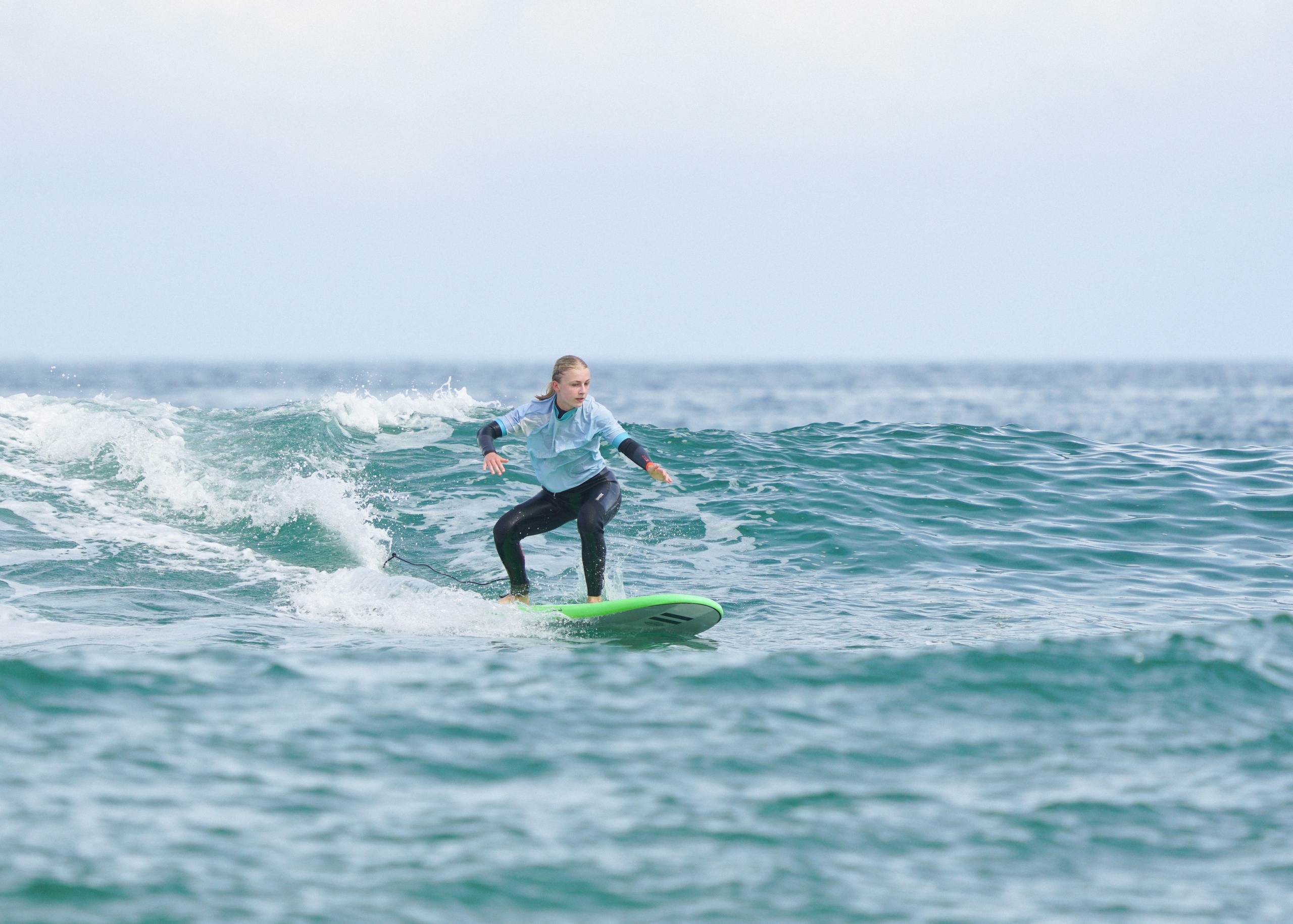
On a small day, El Cotillo and Corralejo have sand and instructors. The west reefs are a different level.
Gran Canaria: El Confital and Las Canteras
El Confital, under La Isleta in Las Palmas, is a barreling right over a volcanic platform. On a solid north or northwest swell, with wind that behaves, it is one of the best rights in Europe.
It is also shallow, and the peak has a local order. It is not the wave from the two-hour lesson. The proximity is the trap: you are in a capital city, a walk from one of the heaviest waves in the country. Car access has shifted as the bay has been protected. Do not count on driving onto the sand.
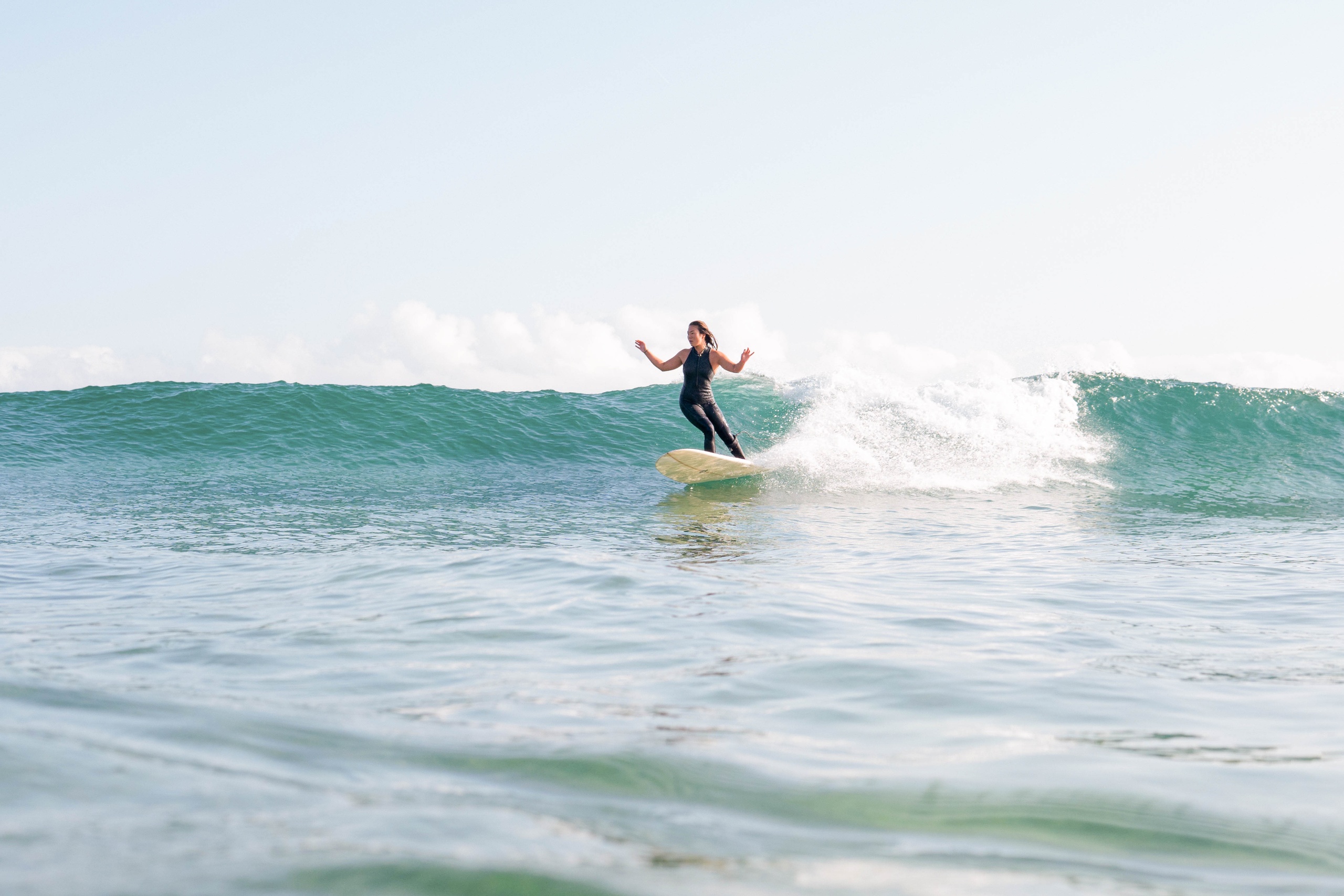
The wave for learning in the city is Las Canteras. A long beach, several peaks (La Cícer among them), and you walk out of the water into Las Palmas. On a small day it is one of the most sensible places in the archipelago. On a north swell it gets serious and crowded. The peaks with a name fill up first. Further along there is usually another, with fewer photos and more room.
Tenerife: the north and Las Américas
The north
Playa del Socorro, in Los Realejos, faces northwest and receives almost the whole swell. Black sand, rock, and the massif behind.
In summer, on a small sea, the more sheltered side of the bay can be friendly. In winter, on a groundswell, it becomes fast, with rips. It stops being a place for someone who has just learned to stand up in the whitewater. If a current takes you, there is no lifeguard waiting.
Further east, Benijo and Almáciga, in Anaga, are beautiful and they have a heavy shorebreak. They make sense from the viewpoint. In the water, only if you already handle a powerful beach break.
The south
Playa de las Américas lives on swell that has wrapped the island. La Izquierda and El Conquistador (the right next to it) break on lava in sight of the promenade. You can see them from the pavement. That is why there is a queue at the peak, and why the trade wind does not blow into the face of the wave here.
On a small day, beginner schools work on this beach. On a real day, the main peak is intermediate to advanced and the tide is in charge. Less water brings the reef up. If you do not know the exit, wait for more water and watch a full set before you paddle. A lesson does not need a car. Taking the main peak on a January Sunday does need you to have surfed reef before.
Beginner lessons in southern Tenerife
Built for small days at Playa de las Américas. When La Izquierda is on, the main peak is no longer a lesson.

Small-group surf lesson (2 h)
A 2-hour group surf lesson with Kontraola. Small groups, age 13+, beginner or intermediate.
 Google1,418 reviews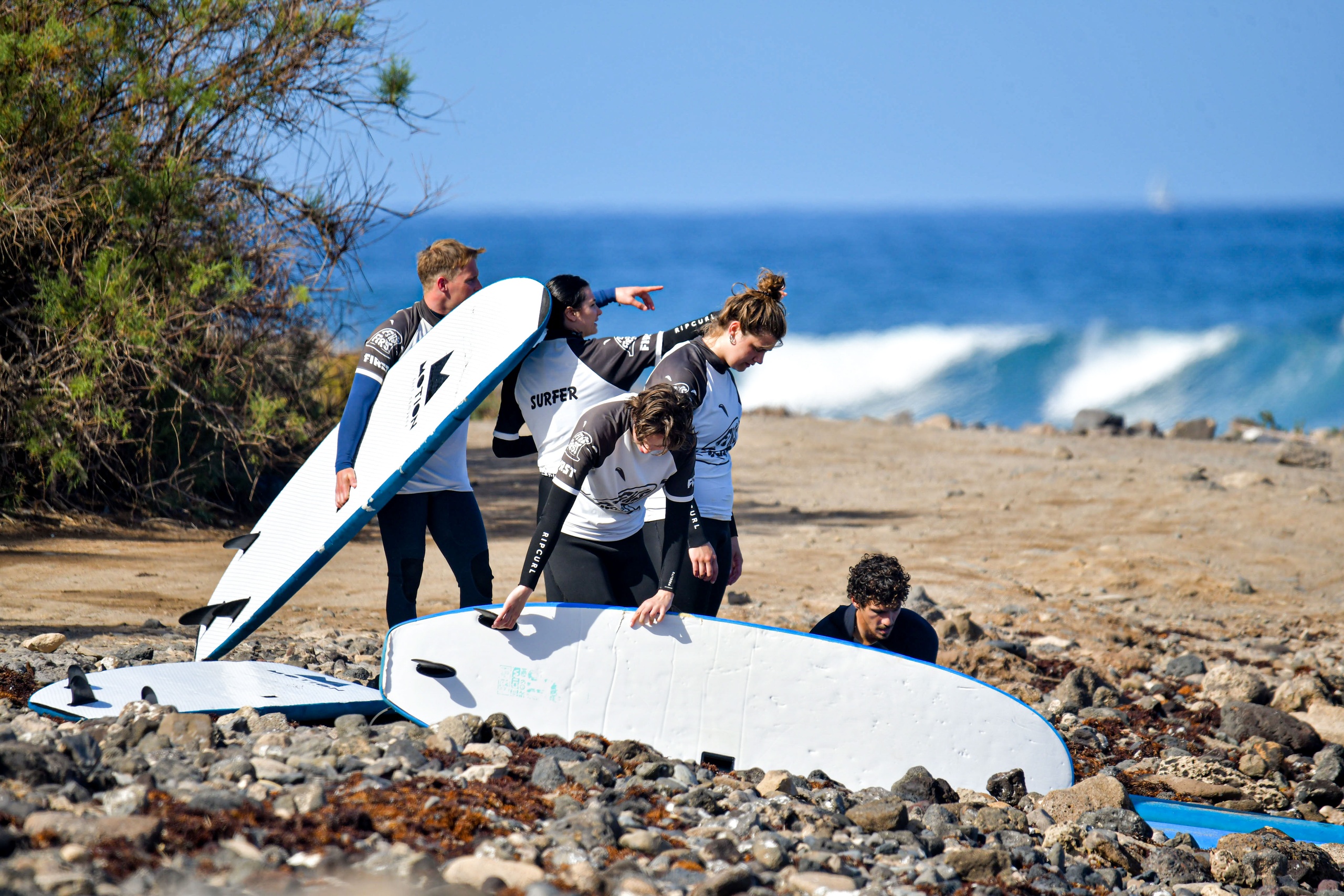
Group surf lesson (max 6)
A 2-hour group surf lesson in Playa de las Américas: max 6 per instructor, with board and wetsuit…
Surf lesson in Las Américas
Surf lesson in Playa de las Américas: beach theory and water practice with wetsuit, board and…
What to pack and how to behave
- Suit: from October to April, a 3/2. People who get cold in January and February, at dawn and on the north shore, add a 4/3. From June to September a shorty or a long-sleeve lycra is enough: in the trades, the sun does not announce itself until the evening.
- Feet: on sand, a thin bootie or nothing. On reef, booties with a sole. Long-spined urchins go through a swimming sock.
- Board: in a lesson, the school's foam board. If you already surf and you are coming to a winter reef, rent something you can accept hitting on lava.
- Priority: it belongs to whoever is deepest, at the peak. At El Quemao, El Confital and El Socorro there is a local order. On holiday, the set is not yours.
- The lesson stays inside: whitewater and the school group stay away from the peak where people are actually taking off.
The Canarian Surfing Federation publishes the contest circuit and the clubs. It is for competing, or for finding a club. It does not replace the morning forecast, or a lesson if this is your first week.
In winter: Fuerteventura if you want day after day of beach breaks. Lanzarote if the goal is El Quemao and Famara is the backup. Southern Tenerife if the trip is not only surfers. El Confital is for people who already surf that kind of right.
Things to do on the island
Experiences in Lanzarote
Plans on the island, with duration and price up front.