Guide Gran Canaria
Charming villages in Gran Canaria: route
Road trip across Gran Canaria's prettiest villages: Teror wooden balconies, Tejeda, Agüimes stone alleys, Santa Lucía and Fataga palm oasis.
Contents
Beyond bustling southern beach resorts and the lively capital, Gran Canaria’s midland valleys and mountain peaks shelter an exceptional collection of historic heritage villages. In these rural hamlets, traditional Canarian architecture shines at its finest: whitewashed basalt masonry walls, curved terracotta roof tiles and masterfully carved wooden balconies crafted from tea wood (the rot-resistant resinous heartwood of native Canary pine).
Linking these hamlets via scenic mountain roads reveals the island’s deep agricultural soul, centuries-old almond confectionery traditions, and mountain gastronomy rich with local flavor.
Gran Canaria heritage route highlights
Teror: religious heart and tea-wood balconies
Nestled in a verdant mountain valley, Teror is Gran Canaria’s spiritual capital. In its main square stands the Basilica of Nuestra Señora del Pino, patron saint of the Canary Islands diocese. The cobbled Calle Real leading to the church resembles an open-air architectural museum of 17th- and 18th-century noble mansions adorned with ornate overhanging balconies.
The essential culinary treat in Teror is tasting its renowned chorizo de Teror (a warm, spreadable spiced pork sausage made with sweet paprika and garlic) spread over freshly baked egg bread alongside mild artisanal cheese.
Tejeda: almonds and volcanic calderas
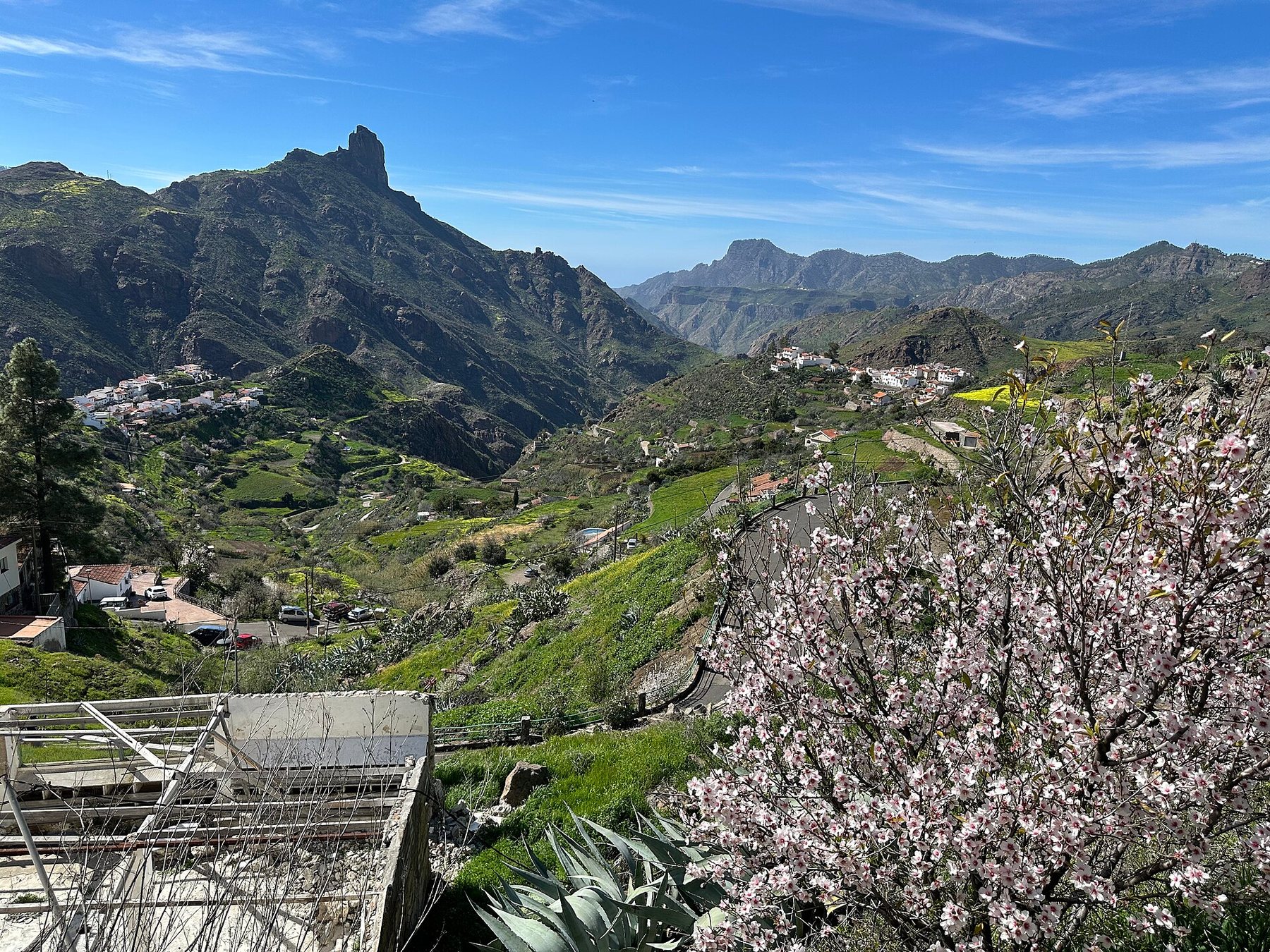
Officially voted among *The Prettiest Villages in Spain*, Tejeda perches at over a thousand metres above sea level overlooking the vast central erosion amphitheatre famously described by writer Miguel de Unamuno as a 'petrified tempest'. Its pristine alleys feature whitewashed cottages with dark wood shutters and terraced almond orchards that burst into pink and white blossom every February.
While in Tejeda, visiting the historic *Dulcería Nublo* bakery is mandatory to pick up handmade marzipan and bienmesabe, a decadent traditional Canarian sweet paste made from ground almonds, local honey, egg yolks and lemon zest.
Agüimes and the Valley of Thousand Palms
-
Agüimes Historic Quarter
Founded in 1491, its pedestrian centre features stone alleys flanked by dressed-stone houses, peaceful plazas and life-size bronze statues depicting traditional trades.
-
Fataga (The Valley of the Thousand Palms)
A cliffside village overlooking a dense forest of Canary palms. Its cobblestone lanes, terracotta roofs and flower-filled courtyards capture authentic southern rural charm.
-
Santa Lucía de Tirajana
Encircled by century-old olive groves and date palms, famous for its white-domed hilltop church and local museums dedicated to aboriginal Canarian culture.
Guided mountain and village tours in Gran Canaria


Things to do on the island
Experiences in Gran Canaria
Plans on the island, with duration and price up front.
See all 53 experiences in Gran Canaria