Guide Tenerife
Mount Teide: cable car, summit permits and walking routes
Guide to Mount Teide: cable car tickets, summit permits without months of waiting, walking routes, driving directions and weather advice.
Contents
- Cable car: tickets, times and wind restrictions
- Summit permit: Telesforo Bravo trail
- What to do if official permits are sold out
- Permit-free trails from La Rambleta
- Hiking to the top: the Montaña Blanca route
- Fascinating curiosities beyond the guidebooks
- How to get there: rental car and public buses
- Sunset and stargazing: world-class Starlight skies
- Essential preparation and safety advice
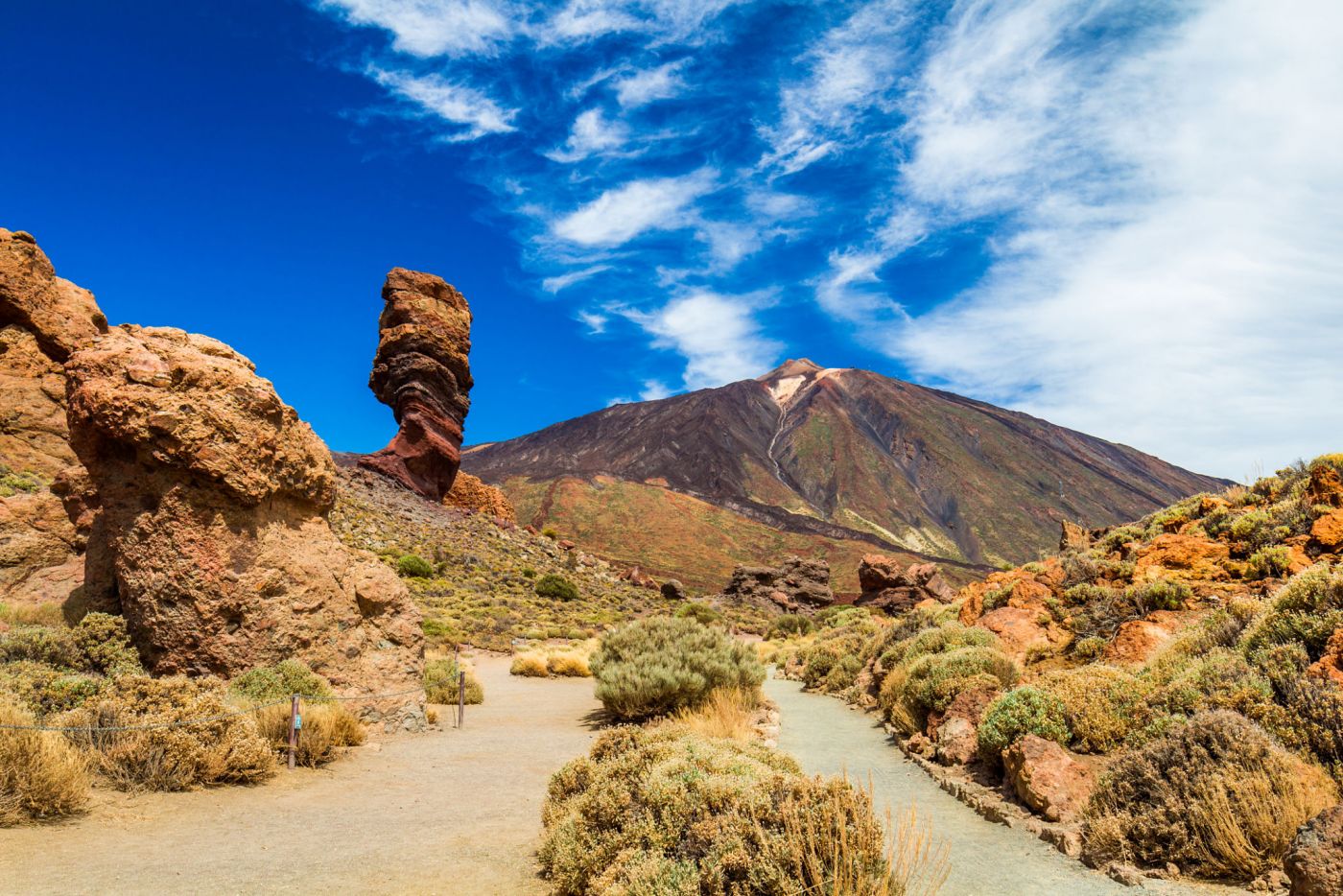
Standing at 3,715 metres (12,188 ft), Mount Teide is Spain's highest peak and the third-tallest volcano on Earth measured from its oceanic base. Visiting its volcanic slopes and the high-altitude caldera of Las Cañadas requires clear planning: oxygen levels drop significantly, summit temperatures are regularly 15 °C colder than on the coast, and access to the summit crater is strictly regulated.
To the indigenous Guanches, it was Echeyde, dwelling place of the devil Guayota, whom the supreme god Achamán trapped inside the volcanic core with a giant plug of stone. Centuries later in 1799, Alexander von Humboldt hiked to the peak, took barometric measurements and laid the foundations of plant biogeography. This guide covers the real-world logistics of visiting: cable car, permits, hiking and unmissable curiosities.
Mount Teide fast facts
Cable car: tickets, times and wind restrictions
The cable car departs from kilometre 43 on the TF-21 road. In just eight minutes, the cabin ascends 1,199 vertical metres, delivering you to La Rambleta at 3,555 metres above sea level. Operating hours are usually 09:00 to 16:30 or 17:00 depending on the season.
What happens if wind picks up? At high altitude, winds can strengthen rapidly. The cable car halts operations whenever gusts exceed moderate thresholds (around 50 km/h). If services are cancelled due to adverse weather, tickets are fully refunded or rescheduled without fees.
Summit permit: Telesforo Bravo trail
The upper cable car station at La Rambleta (3,555 m) does not give you permission to walk to the crater rim. The final 160 vertical metres between La Rambleta and Punta Caldera (3,715 m) require access via Trail No. 10 (Telesforo Bravo), strictly regulated to safeguard delicate sulfur vents and prevent overcrowding.
What to do if official permits are sold out
If your trip is coming up soon and no free slots remain on the public calendar, you still have two legitimate paths:
- Join a tour with an accredited official mountain guide: Authorised active tourism companies hold dedicated operational allocations. Booking a guided trek secures legal access to the summit crater along with cable car passes and an expert mountain leader.
- Explore the permit-free trails from La Rambleta: Even without summit clearance, standard cable car tickets let you explore two breathtaking panoramic viewpoints without any special permission.
Summit ascent with an accredited mountain guide
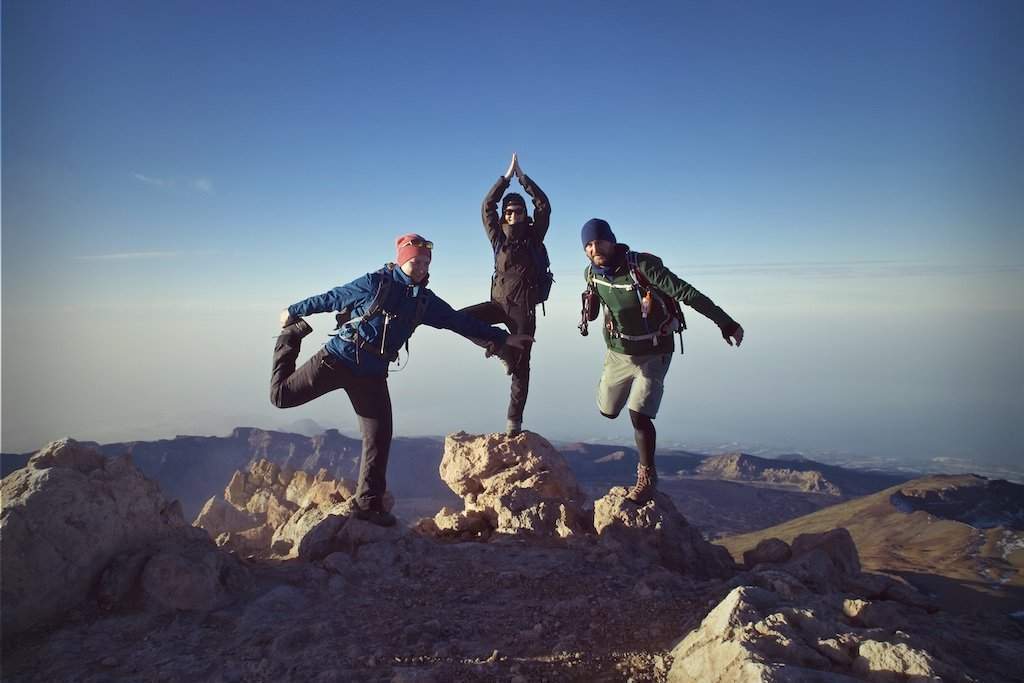
Permit-free trails from La Rambleta
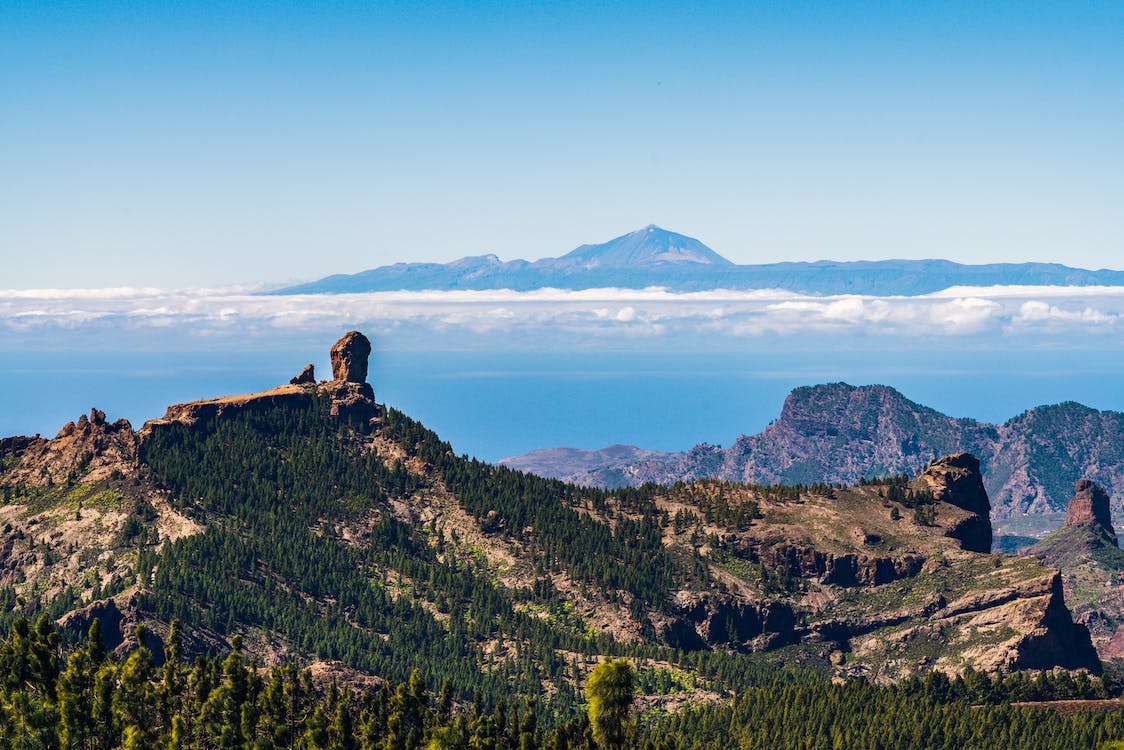
- Trail No. 12 · Pico Viejo Viewpoint: A 750-metre trail (around 30 minutes at an easy pace) descending gently towards the southwest. It leads to a striking overlook above the vast 800-metre crater of Pico Viejo. Along the way you pass steaming sulfur vents, and on clear days you can clearly spot La Gomera, La Palma and El Hierro across the Atlantic.
- Trail No. 11 · La Fortaleza Viewpoint: A level 25-minute path heading north, providing a broad panoramic vista over Anaga, the green valley of La Orotava and the trademark sea of clouds.
Hiking to the top: the Montaña Blanca route
For fit hikers who prefer to conquer the peak entirely on foot, the classic mountain route ascends via Trail No. 7 from the base of Montaña Blanca (8.3 km and 1,188 m elevation gain).
-
Montaña Blanca car park (2,348 m)
Begins along a wide, gentle dirt track cutting through white pumice fields. Space is limited (barely 10-15 vehicles), making an early morning arrival or bus travel essential.
-
Los Huevos del Teide (2,700 m)
Massive volcanic accretion balls rolled down the mountainside during historical eruptions, accumulating molten layers like giant dark boulders.
-
Lomo Tieso and Altavista Mountain Refuge (3,260 m)
The gradient steepens sharply along switchbacks over rugged scree. Note that the historic Altavista refuge is temporarily closed for overnight stays.
-
La Rambleta (3,555 m)
The junction where Trail 7 meets the upper cable car station and the checkpoint for Trail 10 to the crater.
Fascinating curiosities beyond the guidebooks
- World's longest shadow cast over the sea: At sunrise and sunset, Mount Teide casts a shadow stretching over 40 kilometres across the Atlantic towards La Gomera or Gran Canaria. Due to atmospheric perspective, the shadow forms a perfect geometric pyramid regardless of the mountain's irregular crest.
- Active 85 °C fumaroles: The volcano is dormant, not dead. At La Rambleta and within the crater, sulfurous steam vents hiss out gases at 85 °C (the boiling point of water at 3,700 m due to lower atmospheric pressure).
- Blinding pumice glare: On Montaña Blanca, the white pumice stone reflects ultraviolet rays just like alpine snow. Category 3 or 4 UV sunglasses are essential to prevent eye burn.
How to get there: rental car and public buses
All roads into the national park are fully paved and well-signposted: TF-24 via La Esperanza from the north, TF-21 via La Orotava, TF-38 via Chío from the southwest, and TF-21 via Vilaflor from the south.
Public transit (TITSA bus): Line 348 leaves Puerto de la Cruz at 09:30 (return 16:05), while Line 342 leaves Costa Adeje at 09:15 (return 15:30). Plan your descent carefully to catch the single daily return bus.
Sunset and stargazing: world-class Starlight skies
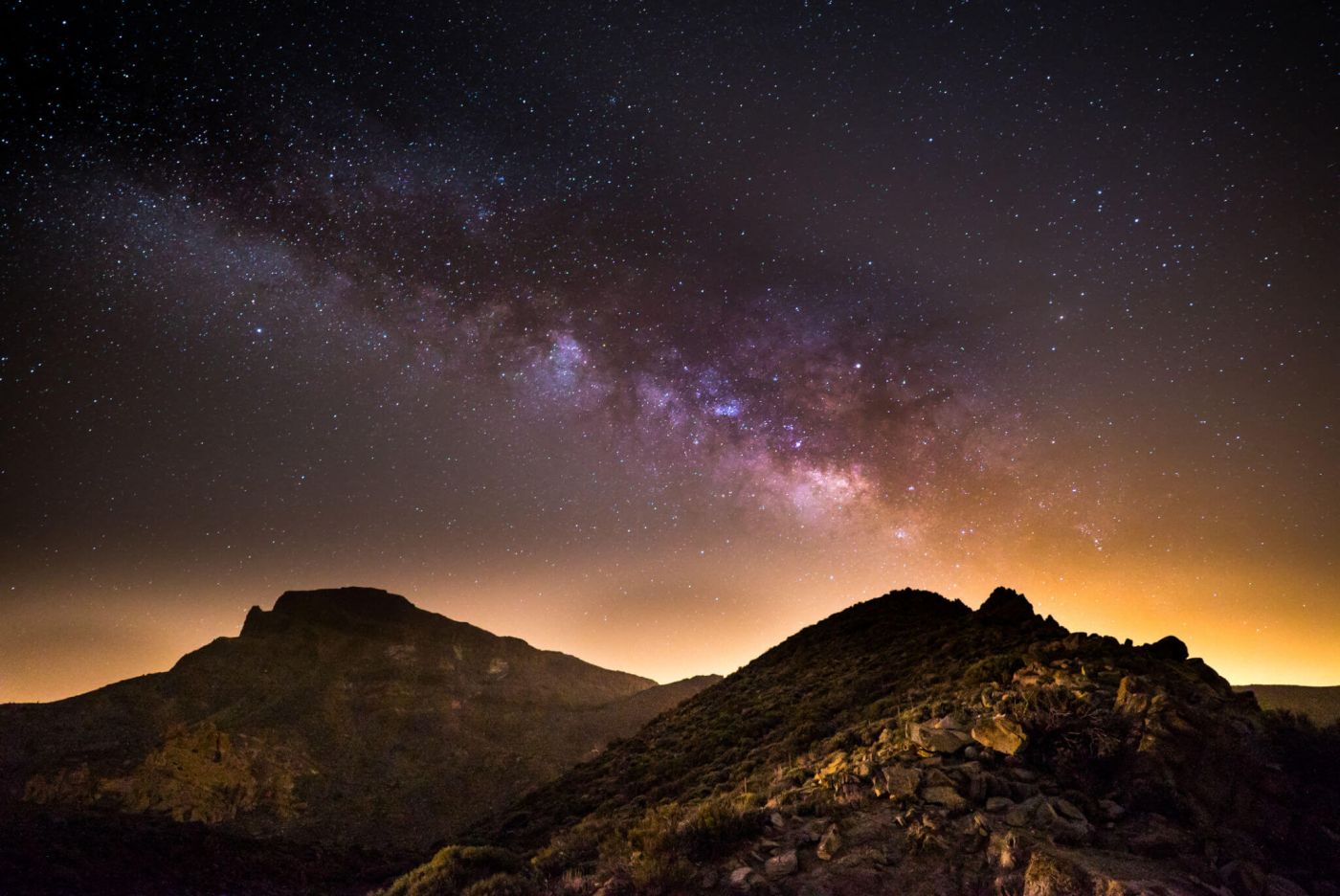
Once daytime visitors leave, Las Cañadas enters complete stillness. Trade wind cloud layers remain below 2,000 metres, leaving the summits dry, crisp and free of light pollution—qualifying the area as an internationally recognised Starlight Reserve.
Stargazing and sunset tours in Mount Teide

Essential preparation and safety advice
- Layered warm clothing: Even when beaches are 28 °C, La Rambleta averages 2 °C to 8 °C with sub-zero windchill. Fleece, windbreaker and closed hiking shoes are essential.
- High UV protection: Intense solar radiation at 3,500 metres requires high-protection sunscreen, a hat and sunglasses.
- Carry all water: No drinking water fountains exist on the upper mountain. Carry at least 1.5 litres per person.
Things to do on the island
Experiences in Tenerife
Plans on the island, with duration and price up front.
See all 52 experiences in Tenerife