Guide La Palma
What to see in La Palma: volcanoes & stars
What to see in La Palma: Caldera de Taburiente National Park, Roque de los Muchachos, Tajogaite volcano, coastal boat tours and stargazing.
Contents
Known locally as La Isla Bonita (The Pretty Island), La Palma boasts the steepest relative elevation on Earth: across just a few straight kilometres, its terrain soars from sea level to nearly 2,500 metres at the summit of Roque de los Muchachos. Designated in its entirety as a UNESCO World Biosphere Reserve, the island delivers striking contrasts between prehistoric laurisilva rainforests in the north, the massive erosion amphitheatre of Taburiente, and jet-black lava fields recently formed in the south.
Unlike resort-heavy destinations catering to package beach holidays, La Palma remains a sanctuary for pure wilderness, high-altitude trekking and scientific exploration. Its night sky, shielded by world-first legislation, attracts leading international astrophysicists, while its wave-battered western cliffs hide sea caves reachable only by boat.
La Palma highlights at a glance
Caldera de Taburiente National Park
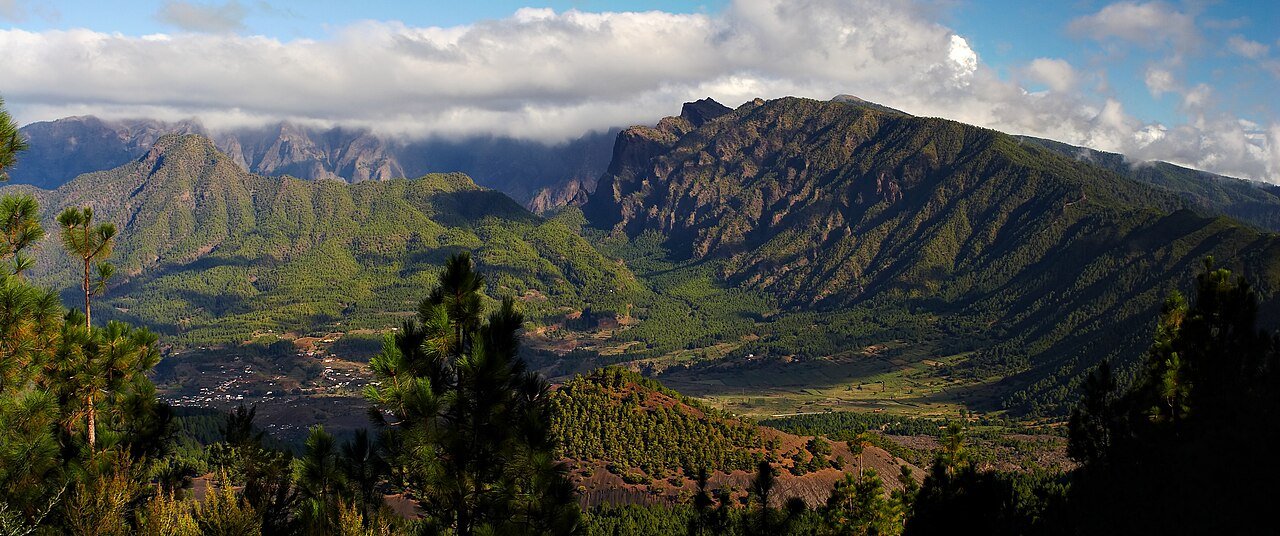
Rather than a volcanic crater, this immense depression is an eight-kilometre-wide erosion basin surrounded by sheer rock walls plunging nearly 2,000 metres. Caldera de Taburiente is the freshwater heart of the island, teeming with year-round mountain streams, springs and dense forests of fire-resilient Canary pine trees.
- La Cumbrecita Viewpoint: The most accessible driving viewpoint peering into the caldera abyss. Free advance parking reservations are mandatory to control vehicle traffic.
- Barranco de las Angustias: The dramatic canyon gorge where mountain rains drain towards the Atlantic Ocean at Tazacorte.
- Cascada de Colores: A secluded waterfall hidden deep inside the gorge where iron-rich mineral water paints natural rock walls in vivid yellow, ochre and green moss tones.
Roque de los Muchachos and world-class stargazing
At 2,426 metres above sea level lies La Palma's highest crest. Here, trade wind clouds remain trapped between 1,000 and 1,600 metres in an inversion layer, leaving the high atmosphere exceptionally dry, stable and pristine.
In 1988, Spain passed the groundbreaking Sky Law (Ley del Cielo), a global first that banned upward street lighting, restricted flight paths over the island and regulated radio frequencies to protect astronomical observation. Today, the Roque de los Muchachos Observatory operates some of the world's premier research instruments, including the Gran Telescopio Canarias (GTC).
Tajogaite volcano: living geology from 2021
For 85 days in the autumn of 2021, the Earth opened up along the Cumbre Vieja ridge. The eruption of Tajogaite volcano expelled over 200 million cubic metres of molten magma and ash, reshaping more than 1,200 hectares of land across the Aridane Valley.
Today, the main volcanic cone rises over 200 metres above the former ground level. Visitors can view the black volcanic cone and basalt lava deltas (fajanas) that pushed into the ocean. Official guided walking tours led by local geologists offer authorized access to safety perimeters to observe the island’s raw creative forces.
The wild northwest coast and Cueva Bonita
La Palma’s western coast drops vertically into the Atlantic Ocean in an unbroken wall of cliffs impassable by land. The only way to explore these hidden wonders is via boat excursions departing from Puerto de Tazacorte:
-
Cueva Bonita (The Pretty Cave)
A cavernous marine cave carved by the sea with two distinct openings. In the 17th century, local fishermen used the twin entrances to escape Barbary pirates by sailing into one opening and escaping through the other while attackers were disoriented inside.
-
Porís de Candelaria (Tijarafe)
A collection of whitewashed stone cottages built by fishing families inside a 50-metre-high natural rock amphitheatre right at the water's edge to escape summer heat.
-
Marine wildlife and newly formed lava deltas
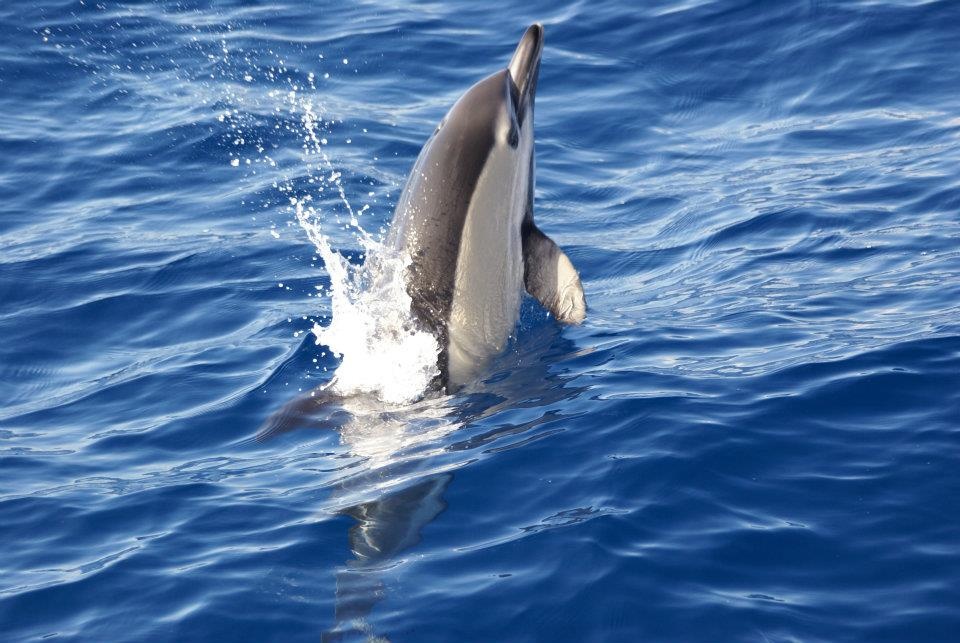
Coastal boat routes also cruise past the freshly cooled lava deltas created in 2021, with frequent encounters with resident bottlenose dolphins and loggerhead sea turtles.
Recommended boat tours in La Palma

The green north: Los Tilos laurisilva rainforest
In the north-eastern corner of La Palma, the Los Tilos forest preserves one of the most intact ancient laurisilva rainforests in the world. This prehistoric ecosystem thrives on horizontal precipitation: dense fog from trade winds condenses on giant ferns and laurel crowns, feeding deep aquifers and the famous Marcos and Cordero water tunnels.
Things to do on the island
Experiences in La Palma
Plans on the island, with duration and price up front.
See all 8 experiences in La Palma